
Is this tiny coin a newly discovered denomination for the London mint during the short restoration of Henry VI, from October 1470 to April 1471?
As with all numismatic research, whether identifying or attributing a coin, a process of elimination is required. This article documents that process and the conclusions drawn from the examination of this coin.
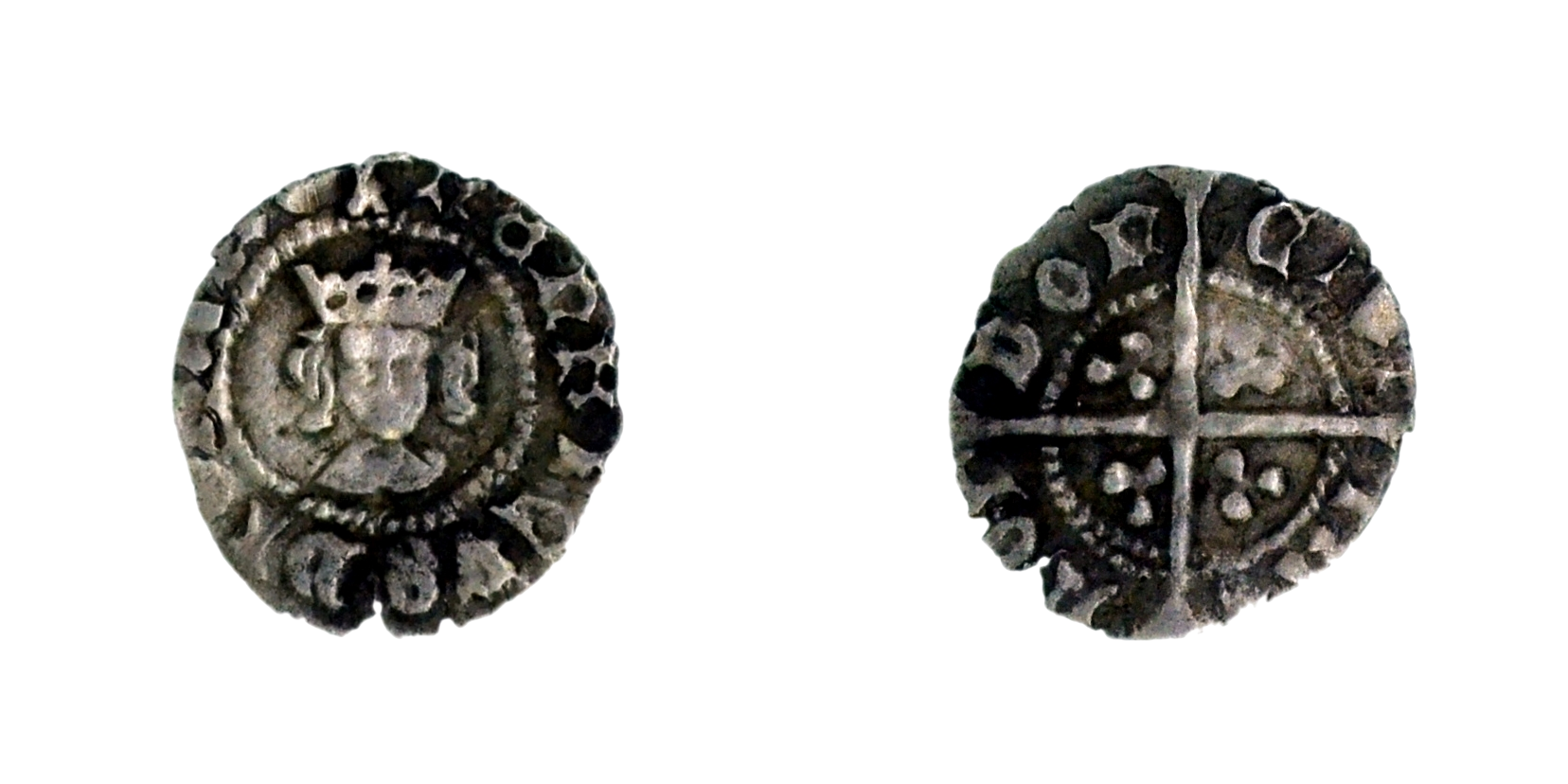
Based on size and weight alone, the coin is clearly a farthing. The reverse legend CIVI TAS LOnDOn confirms London as the mint. The portrait style and legends place the coin within the reigns of the later medieval Henries, narrowing the field considerably.
Henry I, II, and III can be ruled out immediately, as none issued round farthings. Henry III’s fractional issues were short-cross types and stylistically incompatible. This leaves Henry IV, Henry V, and Henry VI as potential candidates.
Henry IV farthings carry the legend +hEnRIC:REX.AnGL' and show no bust. Neither the legends nor the portrait style match the coin in question, allowing this reign to be ruled out.
Henry V continued the legend +hEnRIC:REX.AnGLIE. Portraits are either large heads without busts or small heads with long thin necks. Again, neither legends nor portrait align with the research example.
First-reign farthings consistently end with REX ANGLIE. While the Pinecone Mascle issue uses the king’s full name, it includes distinctive legend stops not present here. Annulet issues come closer but still fail to match fully.
During Henry VI’s brief restoration, legends were updated following Edward IV’s reform, now reading DI GRA REX. The London halfpennies of this period confirm the adoption of this new format.
The coin’s legend structure, absence of privy marks, and the presence of a distinctive cross with a nick at the base strongly suggest the so-called “Restoration Cross.” Together, these features firmly place the coin within Henry VI’s second reign.
This coin can confidently be identified as a Henry VI farthing struck at the London mint during the restoration period of October 1470 to April 1471. All other reigns and issues can be excluded through stylistic, epigraphic, and metrological comparison.
All other silver denominations of this short reign are known, making the existence of a farthing both logical and historically plausible. As this denomination is not recorded in Coins of England or North, it represents a potential new addition to the English numismatic record.
If you have further information, comparable examples, or alternative interpretations, I would be pleased to hear from you.
Simon Hall
Numismatist – Halls Hammered Coins
Simon@HallsHammeredCoins.com
BNS Research Blog
18 April 2025